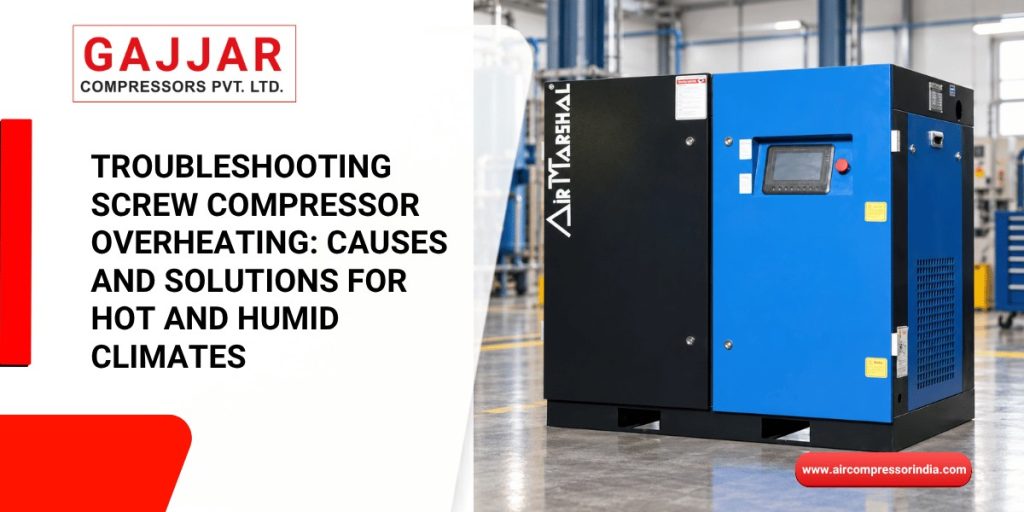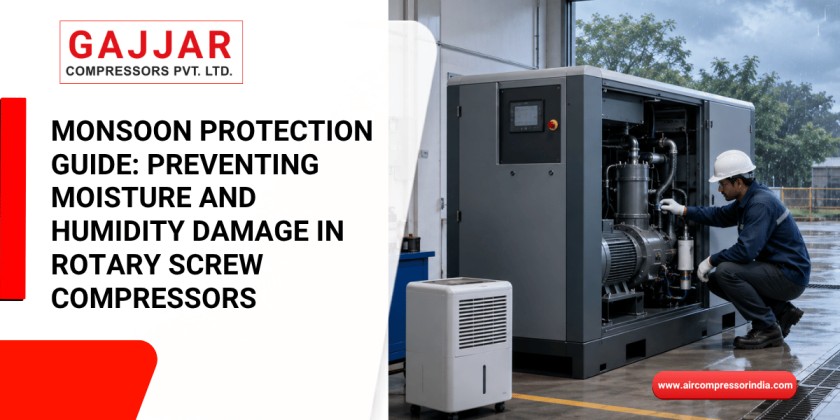
Indian monsoon seasons bring rain but create difficult situations for industrial machinery operations. Moisture, condensation, and changing temperatures might negatively affect the compressed air system, especially when the rotary screw compressor operates in a humid environment with poor ventilation.
In terms of choosing the rotary screw air compressor manufacturers in India, it is not only about the machine itself. The installation, dehumidification, and maintenance are equally important processes during the monsoon season.
Moisture enters the air compressor from the atmosphere. As the air is compressed and cooled, the moisture contained in it condenses. And without proper draining, the moisture will corrode the equipment and interrupt its operation.
Why Monsoon Humidity Is a Problem for Screw Compressors
During the rainy season, humidity levels stay high for a long period of time in cities like Ahmedabad, Mumbai, Surat, Chennai, and Kolkata. As a result, the intake air for the compressor is moist.
The issue is even more noticeable because as the compressed air gets cooled down, moisture collects in the receivers, filters, pipelines, and low points in the distribution system.
Common high humidity screw compressor issues include:
- Condensation in the air receiver
- Corrosion and rusting in the pipes
- Moisture in the pneumatic tools
- Clogged filters and drains
- Inconsistent performance of control valves
- Maintenance is more required
- Compressed air quality deteriorates
- Unexpected production downtime
Humidity may even become a problem for processes that are sensitive to it. Controlled compressed air quality is needed in industries such as pharmaceuticals, food processing and electronics.
7 Practical Ways to Protect Your Compressor During Monsoon
1. Keep the Compressor Room Dry
The best area to install the compressor is a dry, clean, and well-ventilated place. It is best to avoid areas where rainwater could fall in the compressor room or there is always dampness on the floor.
Check the doors, windows, roofs, and ventilations before the monsoon. Even a minor water leakage could be a recurring issue.
2. Inspect the Air Intake
The air compressor uses surrounding atmospheric air for compression, so the intake point is important.
The intake should not be exposed to rain, stagnant water, chemical fumes, or any dust-laden environment. The intake filter must be checked periodically due to monsoon rains.
3. Use an Aftercooler and Moisture Separator
The use of aftercoolers lowers the temperature of compressed air, resulting in the condensation of large amounts of moisture to enable its removal from the air.
Moisture separators help to remove moisture from the compressed air. This is especially useful where there is high humidity.
4. Do Not Ignore the Air Dryer
While a separator will remove liquid moisture from the air, it is not an alternative to a well-chosen dryer in cases when the application requires dry air.
A refrigerant dryer may be generally appropriate for most industrial applications, whereas adsorption dryers are required for applications requiring lower dew points.
The correct choice depends on the application, required air quality and operating conditions.
5. Drain Condensate Regularly
Water may collect in the receiver tanks, filters, separators and other components of the air-compression system.
The drainage of drains should not be put off until there is a visible problem. While automatic drains will be helpful, these should still be inspected to ensure that they work properly.
The basic monsoon maintenance checklist should include:
- Drain of receiver tanks
- Moisture separators
- Drains of dryers
- Filters’ bowls
- Pipelines’ low points
- Water traces
6. Check Filters and Lubrication
Moist and dirty air will put more strain on filter components. Verify the pressure drop through filters and change filter elements at intervals recommended by the manufacturer.
When dealing with oil-injected rotary screw compressors, use the right compressor lubricating oil and check its condition as recommended by the manufacturer. Do not base oil changing or servicing on weather assumptions.
7. Keep Compressor Accessories Ready
Proper accessories will help you manage moisture much more easily. Based on your needs, you will need to have an air dryer, moisture separator, filter, drain, receiver tank, etc.
If your factory uses Air Marshal compressor accessories, then check these before the start of monsoon season to ensure that the right components are in place.
A Simple Monsoon Maintenance Routine
Rather than wait for an alarm from the compressor or any production problem, split up the maintenance into three phases.
Daily:
Drainage tests, excessive water presence, pressure tests, and any leaking.
Weekly:
Filters, air flow, intake conditions, and water dampness in the compressor room.
Monthly:
Dryer efficiency, servicing indicator, condensation, and compressed air quality.
In this way, small issues can be prevented from turning into costly breakdowns.
Common Mistakes to Avoid
Operating a Compressor in a Wet Environment
The compressor should never be made into a place where one stores wet materials or where there is a constant flow of water.
Assuming a Separator Removes Everything
A moisture separator is effective for liquid water, but the water vapours might linger. For cases of dry air, appropriate dehydrating devices should be put in place.
Neglecting Pipeline Drainage
Water is not always found near the compressor because of the condensation process in the pipeline after compression of air.
Skipping Maintenance during Peak Production Time
Problems associated with a monsoon season on a compressor usually become expensive.
Conclusion
Maintaining monsoons is not just about making sure the rotary screw compressor remains dry from any external influences. The difficult thing is to control the moisture that gets into the machine along with the moist atmospheric air.
While choosing the rotary screw air compressor manufacturers in India, the issue of moisture should be considered during the initial stage itself.
Maintaining the compressor room, proper drainage, proper filters and proper drying equipment will go a long way in helping in reducing corrosion and associated costs.
Prior to the next monsoon season, take a look at your compressor room and your compressed air system. For dependable compressors and accessories, look no further than Air Compressor India.
FAQs
- What are the common high humidity screw compressor problems?
Some of the common issues include condensation, corrosion, moisture in the compressed air, filter clogging, faulty draining system, and failure of pneumatic devices because of water build-up. - How do I protect my rotary screw compressor during monsoon season in India?
Make sure the compressor is in a dry environment, cover the air intake point of the compressor, and install an appropriate air treatment system. - Is an air dryer essential for every screw compressor?
It may not be necessary. The necessity is dependent on the application and the quality of the compressed air required. Processes that are sensitive usually require tighter moisture control than other workshop processes. - Why do I get water inside my compressor receiver?
The moisture enters the compressor as a result of the atmosphere through which air is drawn. The combination of these leads to condensation of moisture. - What should be considered while selecting rotary screw air compressor manufacturers in India?
Capacity and pressure are not the only parameters that one needs to check while choosing a compressor. Other factors are energy efficiency, maintenance, spares availability, and environmental compatibility.

Gajjar Compressors Pvt. Ltd.
Gajjar Compressors Pvt. Ltd. is an experienced name in the compressed air industry, providing reliable insights on industrial air compressors, air dryers, vacuum pumps, and related technologies. Our expert content is designed to help manufacturers and businesses make informed decisions, improve operational efficiency, and stay updated with the latest advancements in compressed air solutions.