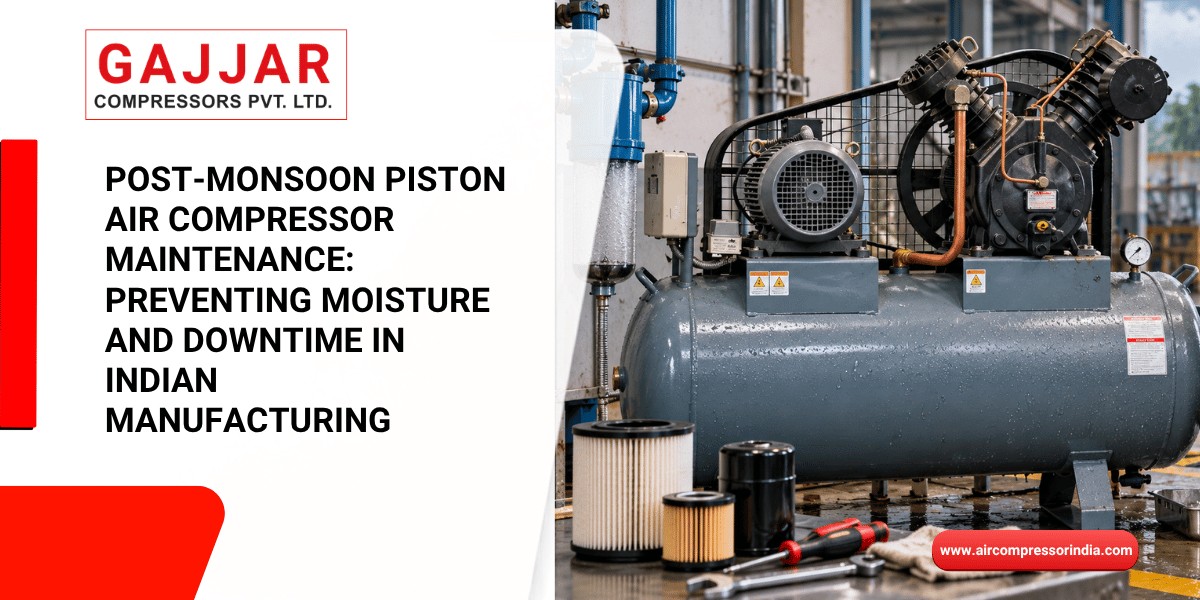
There is a lot more to monsoons than just the wet roads. Inside your factory, humid air has been slipping into compressors, tanks and pipes for weeks. That moisture doesn’t disappear when the rain stops.
Left alone, it causes rust, milky oil, soggy filters and sudden breakdowns. Good post-monsoon piston air compressor maintenance costs far less than a stopped production line. This guide shows you where to look and what to fix first.
Why Is Post-Monsoon Maintenance Important for Piston Air Compressors?
Your compressor breathes in whatever air is around it. In humid months, that air carries plenty of water vapour. Once the air is compressed and cools down, the vapour turns into water and collects in the receiver tank and air lines.
If nobody drains it, the water quietly gets to work. It rusts the tank from inside, mixes with the oil and damages valves and filters.
Units in Ahmedabad, Mumbai, Surat, Chennai and Pune feel this most, because humidity lingers even after heavy rain eases. So a proper inspection should cover five things:
- Moisture removal
- Oil condition
- Filter health
- Electrical safety
- Pressure performance
Key Post-Monsoon Maintenance Steps
1. Drain the Receiver Tank
Water collects here first. Open the drain valve and let every drop out.
If you have an automatic drain valve (ADV), don’t just assume it works. Test it. A blocked ADV stays silent while the tank fills with water.
- Drain fully
- Test ADV
- Watch for rust
2. Check Compressor Oil
Look at the oil sight glass. Fresh oil should look the way your manufacturer describes it. If it appears milky, cloudy or unusually white, water has got in.
Running on such oil speeds up wear on moving parts. Drain it properly and refill with the recommended grade and quantity.
- Check sight glass
- Spot milky colour
- Refill recommended grade
3. Replace Wet Air Filters
A filter keeps dust out of the compressor. After the rains, check it for dampness, dirt and blocked airflow.
If a paper element is wet or clogged, replace it. Drying it in the sun rarely brings back its performance.
- Check dampness
- Replace clogged elements
- Confirm free airflow
4. Inspect Electrical Connections
Water and electricity never mix well. Isolate the power first, then check terminal boxes, pressure switches and starter panels for moisture, corrosion or dust.
Leave electrical work to a qualified technician. Never open panels on a live machine.
- Isolate power
- Check terminals
- Look for corrosion
- Call technician
5. Check Valves and Piston Rings
Humid air and poor lubrication can leave carbon or rust around valves. Look at the intake and exhaust valves for any build-up, corrosion, or damages.
Look for these symptoms and inspect the piston rings as well:
- Low pressure
- High oil consumption
- Unusual sounds
- Increased running time
- Poor air compression
Replace or clean the faulty parts based on the manufacture’s guidelines.
How Can Manufacturers Prevent Moisture-Related Downtime?
Fixing today’s problems is only half the job. Prevention stops them from coming back.
Use an Air Dryer
A dryer removes moisture before air reaches your tools and machines. A refrigerated dryer suits most general work. A desiccant dryer makes sense when you need very dry air.
Your application and required air quality should decide the choice.
Improve Compressor Room Ventilation
Keep the compressor in a clean, airy and dry space. Don’t place the intake near steam, water spray or heavy dust. Better airflow also keeps heat under control.
Inspect Air Lines and Drains
Water likes to sit at the low points of piping. Check drain points for water, rust and leaks. In the weeks after the monsoon, a weekly check is a smart habit.
Keep a Maintenance Record
A simple logbook shows patterns you’d otherwise miss. Note down:
- Oil changes
- Filter replacements
- Tank draining
- Pressure readings
- Odd symptoms
If the same fault keeps returning, your technician can chase the root cause instead of patching the symptom.
Common Post-Monsoon Maintenance Mistakes
Most problems come from skipped basics.
- Draining tank once
- Ignoring cloudy oil
- Cleaning damaged filters
- Restarting on damp panels
- Overlooking small pressure drops
Water keeps collecting while the compressor runs, so one drain isn’t enough. Milky oil is a warning, not normal. A wet filter rarely recovers through cleaning. Damp electricals need drying and checking before power goes on. And a slow pressure drop often points to leaks, valve trouble or a blocked filter.
When Should You Contact Air Compressor Suppliers in India?
If your compressor keeps losing pressure, overheating, using too much oil or making odd sounds after the monsoon, cleaning alone won’t fix it.
A trained technician can inspect it, find worn parts and suggest the right replacements. Always check that a part fits your compressor model. Don’t choose by looks or price alone.
While searching for air compressor suppliers in India, you should not only consider the cost of purchasing the product but also inquire about the following:
- Availability of the product
- Technical support
- Access to spare parts
- After-sales services
If your factory is located in Gujarat, then air compressor spare manufacturers in Ahmedabad will be able to provide you with the compatible parts easily.
Frequently Asked Questions
- How often should I drain a piston compressor’s receiver tank?In humid weather, daily draining is often needed, depending on running hours. Also test automatic drains regularly.
- What does milky compressor oil mean?It usually means water has mixed in. Find the cause and replace the oil as your manufacturer advises.
- Does every piston compressor need an air dryer?Not always. It depends on your application. Moisture-sensitive processes or delicate pneumatic tools benefit greatly from a properly sized dryer.
- What should I inspect after the monsoon?Start with the tank, oil, filters, drains, electricals, valves, piston parts and air lines. Also watch for leaks and pressure changes.
- Where do I get compressor spares in India?Approach trusted air compressor suppliers in India or air compressor spares manufacturers in Ahmedabad, and always match parts to your compressor model.
Conclusion
Post-monsoon care protects your compressor from humidity, condensation and contaminated oil. Drain the tank, check the oil, replace wet filters, inspect the electricals and watch the valves. Make it a yearly routine.
Dependable air compressor suppliers in India and easy access to the right spares also make repairs predictable and cut avoidable stoppages.
Looking for maintenance support or spare parts? Check out Air Compressor India to get the best help for your industry.

Gajjar Compressors Pvt. Ltd.
Gajjar Compressors Pvt. Ltd. is an experienced name in the compressed air industry, providing reliable insights on industrial air compressors, air dryers, vacuum pumps, and related technologies. Our expert content is designed to help manufacturers and businesses make informed decisions, improve operational efficiency, and stay updated with the latest advancements in compressed air solutions.