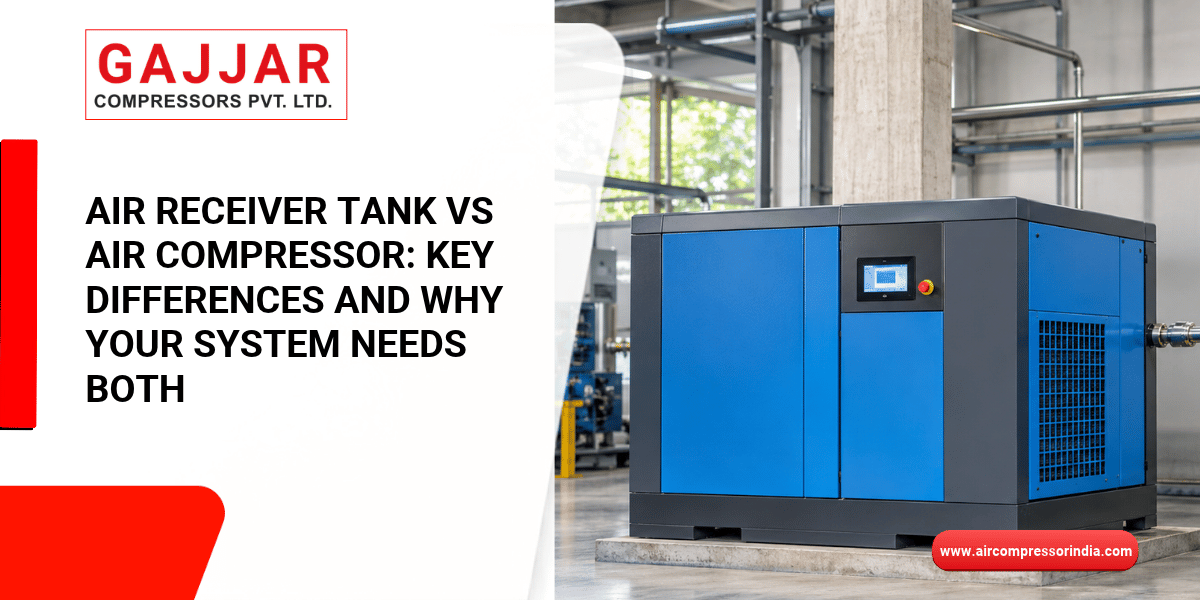
Compressed air is very much needed by various industries in India. Right from auto industries to engineering shops and from pharma plants to packaging plants, the compressed air is used for running various machines and operations.
The two major components of a compressed air system are the air compressor and the air receiver tank. Though these two work in tandem, their role differs significantly.
The air compressor creates the compressed air, and the air receiver tank serves to hold it and deliver it as and when needed. Knowing their distinctions could be helpful to companies in making the correct choice in the equipment they require.
In this article, you will learn about how these devices function, the differences between them, and why the industries need both of them for compressed air production.
What Is an Air Compressor?
Air compressors are mainly those machines that take in air from the environment and compress it into high pressures.
Some of the most common types of air compressors are:
- Rotary screw compressors
- Piston reciprocating compressors
- Oil-free compressors
- Centrifugal compressors
The kind of air compressor you should opt for will be based on your needs for air, pressure, purity of air, etc.
How Does an Air Compressor Work?
It varies depending upon its type, but considering that the rotary screw compressor is one of the most popular compressors used in Indian industries.
In the compressor, the air is sucked through the inlet and trapped in between the rotors. Once the rotors start rotating, the trapped air is pressed towards the outlet point and gets compressed while travelling. Then it is sent into your pipe system.
This is how compressors are found in every nook and cranny in industries such as manufacturing, automobiles, textiles, pharmaceuticals, food processing, and engineering industries.
What Is an Air Receiver Tank?
Air receiver tanks are pressure vessels that hold the compressed air from the compressor. You can liken them to a cushion placed between the compressor and your factory’s other equipment.
Without it, your machines would depend only on whatever the compressor is putting out at that moment. With it, there’s a reserve of stored compressed air ready to step in when demand suddenly goes up.
How Does an Air Receiver Tank Work?
The process is simple:
- Compressor produces air
- Air enters the tank
- Tank holds it at pressure
- Machines draw air as needed
- Stored air covers demand spikes
One more thing worth knowing: as the air cools inside the tank, moisture condenses. This is why a proper drain matters, so the water doesn’t sit there and cause trouble.
And to be clear, the tank doesn’t make any air. It only stores what the compressor sends in.
Air Receiver Tank vs Air Compressor: Key Differences
They work as a team, but their roles are quite different. Here’s a quick side-by-side:
| Comparison Factor | Air Compressor | Air Receiver Tank |
| Main function | Produces compressed air | Stores compressed air |
| Working principle | Compresses atmospheric air | Holds compressed air |
| Power requirement | Needs a power source | Usually needs no separate power for storage |
| Main components | Motor, compression element, control system | Pressure vessel, connections, safety fittings |
| Air supply | Generates the air | Releases stored air into the system |
| Pressure management | Controls air production | Helps handle short-term demand swings |
| Maintenance | Servicing of mechanical and electrical parts | Vessel inspection, draining, safety checks |
| Main purpose | Air generation | Air storage and buffering |
Depending on how the system is designed, most industrial setups need both.
Why Does Your Compressed Air System Need Both?
A compressor paired with a properly sized receiver tank works far better than a compressor alone. Here’s how.
1. Handles Changes in Air Demand
Machines rarely use the same amount of air all day. A packaging machine, for instance, may need a burst of air during certain cycles and much less in between. The receiver tank supplies that extra air from storage, so the compressor doesn’t have to scramble.
2. Reduces Compressor Cycling
When storage and controls are well matched, the tank can cut down on constant load and unload cycles. That means less switching and gentler operating conditions. The real benefit still depends on your compressor type, control settings, demand pattern and tank capacity.
3. Keeps Pressure Steady
A sudden jump in air use can make system pressure dip. The tank acts as a cushion, softening those short-term swings and keeping air delivery more consistent.
4. Helps Separate Moisture
As compressed air cools, water vapour turns into liquid. The tank gives some of that moisture a chance to settle at the bottom, where a good condensate drain can remove it. If your application needs truly dry air, you’ll still want a proper air dryer and filtration on top of this.
5. Improves Overall Efficiency
A well-planned system looks at the compressor, tank, air treatment equipment and piping as one whole. Correct storage helps you handle peak demand while the compressor runs more efficiently. That said, an oversized or undersized setup won’t give you the results you expect, so a proper system assessment is worth doing.
Industries That Require Air Compressors and Air Receiver Tanks
Different industries rely on this pairing in different ways.
Automotive: Pneumatic tools, assembly lines and paint shops all run on compressed air.
Pharmaceutical: Used in processing equipment and packaging machinery. The air quality has to match the application.
Food Processing: Packaging, conveying and processing all use it. Depending on whether the air touches the product, you may need extra filtration and drying.
Textile: Pneumatic machinery and several production processes depend on it.
Engineering and Manufacturing: Workshops use it for pneumatic tools, CNC machines, cleaning equipment and automated systems.
Whatever the industry, size the compressor and tank around your actual air requirement, not guesswork.
How to Select the Right Air Compressor and Receiver Tank
Getting this right saves a lot of trouble later. Keep these points in mind before you buy.
1. Calculate Air Consumption
Add up the air needed by all connected machines. This is usually measured in CFM or m³/min.
2. Check Operating Pressure
Find out what pressure your equipment needs, and make sure both the compressor and tank are rated for it.
3. Pick the Right Compressor Capacity
Choose a compressor that meets your airflow needs without being needlessly oversized.
4. Decide the Receiver Tank Capacity
Tank size depends on compressor output, demand fluctuations, the pressure stability you want, your control strategy and how much storage time you need.
5. Think About Air Quality
Some applications need clean, dry air. You may need:
- Refrigerated air dryers
- Desiccant air dryers
- Line filters
- Moisture separators
- Condensate management systems
6. Check Safety and Installation
Make sure the tank has the right pressure rating and proper safety fittings. Installation, inspection and testing should follow applicable Indian safety requirements.
Common Mistakes to Avoid
These are the slip-ups we see most often:
- Choosing compressor size without calculating demand
- Installing a wrongly sized tank
- Ignoring air leaks
- Running at unnecessarily high pressure
- Skipping condensate drainage
- Delaying maintenance
- Overlooking air quality needs
- Poor ventilation and service access
Steer clear of these, and you’ll get better equipment reliability and lower running costs.
Conclusion
The air compressor and the air receiver tank do different jobs, but they work best together. The compressor generates the air, and the tank stores it and smooths out the ups and downs in demand.
With the right equipment, you get stable pressure, smoother operation and less unnecessary compressor cycling.
If you’re setting up a new system or upgrading an old one, take a close look at your airflow, pressure, storage and air quality needs first. Speaking with experienced air receiver tank manufacturers in Ahmedabad can also help you understand the right storage options and installation requirements.

Gajjar Compressors Pvt. Ltd.
Gajjar Compressors Pvt. Ltd. is an experienced name in the compressed air industry, providing reliable insights on industrial air compressors, air dryers, vacuum pumps, and related technologies. Our expert content is designed to help manufacturers and businesses make informed decisions, improve operational efficiency, and stay updated with the latest advancements in compressed air solutions.