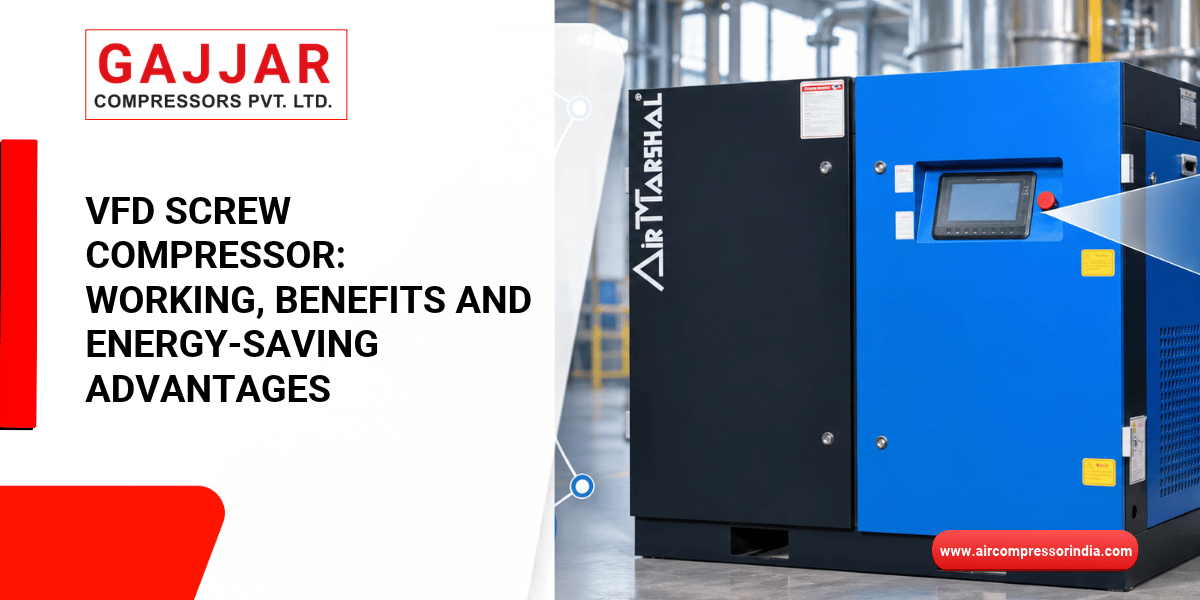
Industries depend on compressed air for various operations, including manufacturing, packaging, automotive production, pharmaceuticals, food processing and engineering. However, operating an air compressor continuously can consume a significant amount of electricity, especially when air demand changes throughout the day.
A Variable Frequency Drive (VFD) screw compressor offers an effective solution to this challenge. It adjusts the motor speed according to the actual compressed air requirement, helping industries reduce unnecessary energy consumption while maintaining a stable air supply.
In this article, we will explain how VFD technology works, its major benefits and how it can help Indian industries improve operational efficiency.
What Is a VFD Screw Compressor?
A VFD screw compressor is an industrial air compressor equipped with a Variable Frequency Drive that controls the speed of its electric motor.
Traditional fixed-speed compressors generally operate at a constant motor speed. When compressed air demand decreases, they may continue running at full speed and enter load and unload cycles. This can result in unnecessary power consumption.
A VFD-controlled system adjusts motor speed based on compressed air demand. When the requirement increases, the motor speeds up. When demand decreases, the motor slows down accordingly.
This flexibility makes it suitable for factories where compressed air requirements change during different production stages.
How Does a VFD Screw Compressor Work?
A VFD system controls the electrical frequency supplied to the compressor motor, allowing it to operate at different speeds.
The working process involves the following steps:
1. Compressed Air Demand Is Monitored
The compressor system uses pressure sensors to monitor the compressed air pressure in the air supply line or receiver tank.
2. Pressure Signals Are Sent to the Controller
The controller receives pressure information and compares it with the required pressure setting.
3. Motor Speed Is Automatically Adjusted
Based on the pressure difference, the VFD increases or decreases the motor speed to match the compressed air demand.
4. Air Supply Is Maintained
The screw air end continues producing compressed air according to the required demand, helping maintain more consistent system pressure.
For example, if a manufacturing facility operates multiple machines during the morning shift but fewer machines during the afternoon, the compressor can adjust its output according to the changing requirement.
Key Benefits of a VFD Screw Compressor
1. Lower Electricity Consumption
Electricity is one of the major operating expenses for industrial compressed air systems.
A VFD compressor reduces unnecessary energy consumption by matching compressor output with actual air demand. This is particularly beneficial for factories where compressed air requirements fluctuate throughout the day.
2. Stable Air Pressure
Pressure fluctuations can affect pneumatic tools, production equipment and manufacturing processes.
VFD technology helps maintain pressure within a controlled range by adjusting motor speed according to system demand.
3. Reduced Load and Unload Cycling
Fixed-speed compressors often switch between loaded and unloaded conditions when air demand changes.
A VFD system can reduce frequent load and unload cycling within its operating range, improving overall operating efficiency.
4. Improved Equipment Performance
Gradual speed adjustments can help reduce unnecessary mechanical stress associated with frequent starting and stopping.
However, proper installation, maintenance and operation within the manufacturer’s specified limits remain important.
5. Suitable for Variable Air Demand
Industries with changing production schedules can benefit from variable-speed technology.
It is particularly useful for automotive plants, engineering workshops, packaging units, pharmaceutical manufacturing and food processing facilities.
6. Potential Reduction in Operating Costs
Lower electricity consumption can contribute to reduced operating expenses. The actual savings depend on air demand, operating hours, pressure settings, compressor efficiency and the existing compressed air system.
VFD vs Fixed-Speed Screw Compressor
Both compressor types are useful for industrial applications, but their operating methods are different.
| Comparison Factor | VFD Compressor | Fixed-Speed Compressor |
| Motor speed | Automatically adjustable | Generally constant |
| Air output | Adjusts according to demand | Depends on load and unload operation |
| Energy consumption | Can reduce consumption at partial loads | May consume more energy during unloading |
| Pressure control | Generally more precise | Wider pressure variation may occur |
| Initial investment | Generally higher | Generally lower |
| Ideal application | Variable air demand | Relatively constant air demand |
The right choice depends on the factory’s compressed air consumption pattern and total operating cost.
Industries That Can Benefit from VFD Technology
VFD screw compressors are useful in industries where compressed air demand changes frequently.
Some common applications include:
- Automotive Industry: Pneumatic tools, painting systems and assembly lines.
- Pharmaceutical Industry: Manufacturing equipment and pneumatic operations.
- Food Processing: Packaging, processing and material handling applications.
- Textile Industry: Pneumatic machinery and production operations.
- Engineering Industry: CNC machines, pneumatic tools and manufacturing equipment.
- Packaging Industry: Filling, sealing and automated packaging machinery.
The compressor must be selected according to the required pressure, airflow, air quality and operating conditions.
Factors to Consider Before Buying a VFD Screw Compressor
Before investing in a variable-speed compressor, consider the following factors:
- Air Consumption: Calculate the total compressed air requirement of your machinery.
- Operating Hours: Check how many hours the compressor will operate daily.
- Pressure Requirements: Select a compressor that meets the required working pressure.
- Air Quality: Determine whether additional filtration and air drying equipment is required.
- Energy Efficiency: Compare the total operating cost rather than only the purchase price.
- Service Support: Choose a supplier that can provide installation, maintenance and technical assistance.
- Operating Environment: Consider ambient temperature, ventilation and available installation space.
A proper compressed air audit can help determine whether variable-speed technology is suitable for your facility.
How to Improve Energy Efficiency Further
Installing a VFD compressor is only one part of an energy-efficient compressed air system.
Industries should also:
- Identify and repair compressed air leakage.
- Clean or replace air filters regularly.
- Maintain the recommended operating pressure.
- Use correctly sized air receiver tanks.
- Install suitable air dryers where required.
- Follow the manufacturer’s maintenance schedule.
- Avoid using compressed air for applications where alternative methods are more efficient.
These practices can improve overall system performance and reduce avoidable energy losses.
Conclusion
VFD technology offers Indian industries a practical way to manage changing compressed air requirements. By adjusting motor speed according to demand, it can improve pressure control, reduce unnecessary energy consumption and support efficient production operations.
Businesses looking for reliable compressed air solutions should evaluate their air consumption, operating hours and pressure requirements before selecting a suitable system. Experienced screw type air compressor manufacturers in India can help industries identify the right compressor configuration for their operational needs.

Gajjar Compressors Pvt. Ltd.
Gajjar Compressors Pvt. Ltd. is an experienced name in the compressed air industry, providing reliable insights on industrial air compressors, air dryers, vacuum pumps, and related technologies. Our expert content is designed to help manufacturers and businesses make informed decisions, improve operational efficiency, and stay updated with the latest advancements in compressed air solutions.