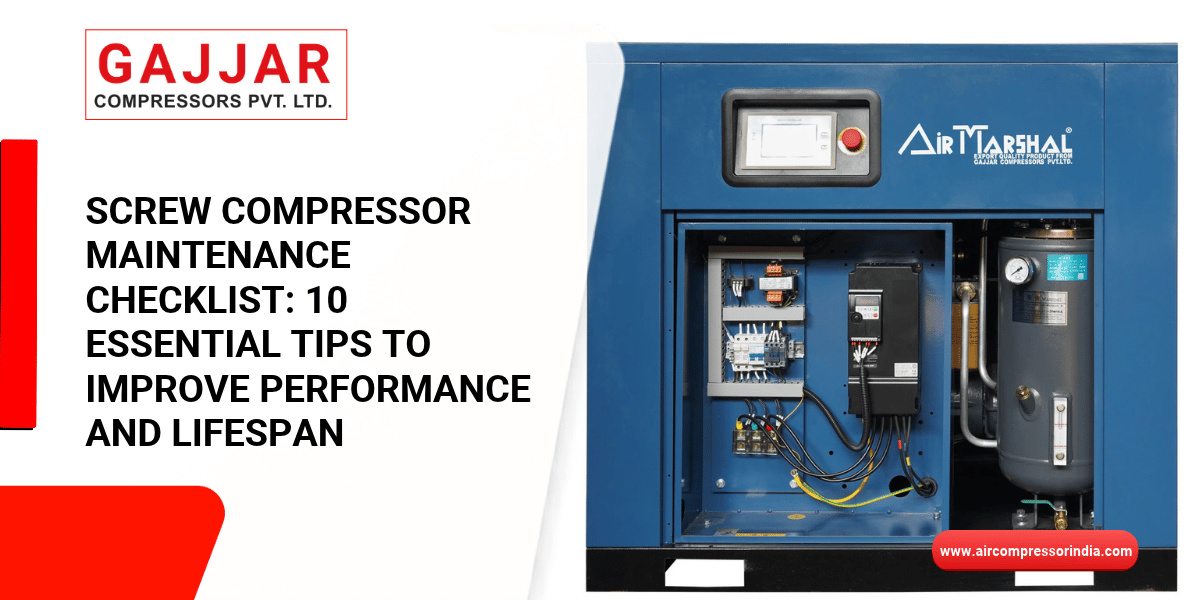
A screw air compressor is an important part of many industrial operations. It provides a continuous supply of compressed air for manufacturing machinery, pneumatic tools, packaging equipment and other industrial applications.
However, continuous operation, high ambient temperatures, dust and changing production requirements can affect compressor performance over time. Without proper maintenance, a compressor may consume more electricity, experience unexpected breakdowns and require expensive repairs.
Regular maintenance helps maintain operating efficiency, improve equipment reliability and extend the service life of the compressor.
In this article, we will discuss 10 essential maintenance tips that Indian industries should follow to keep their screw air compressors in good working condition.
Why Is Screw Compressor Maintenance Important?
Industrial compressors often operate for several hours every day. During operation, different components experience heat, pressure and mechanical stress.
Dust accumulation, oil contamination, filter blockage and improper drainage can reduce compressor efficiency.
Regular maintenance helps businesses:
- Reduce unexpected equipment breakdowns.
- Maintain consistent compressed air output.
- Improve energy efficiency.
- Prevent excessive component wear.
- Reduce repair and replacement expenses.
- Increase equipment service life.
A planned maintenance schedule is generally more cost-effective than waiting for a major problem to occur.
10 Essential Screw Compressor Maintenance Tips
1. Check Compressor Oil Regularly
Compressor oil plays an important role in lubrication, cooling and sealing in oil-injected screw compressors.
Low oil levels or contaminated oil can affect the performance of the compressor and increase component wear.
Maintenance recommendations:
- Check the oil level according to the manufacturer’s instructions.
- Look for unusual oil colour or contamination.
- Use the recommended compressor oil grade.
- Replace oil at the specified service interval.
- Check for oil leakage around connections and seals.
Always use oil suitable for the compressor model and operating conditions.
2. Clean or Replace Air Intake Filters
Air intake filters prevent dust and airborne particles from entering the compressor.
In Indian industrial environments, dust and pollution can cause filters to become clogged more quickly.
A blocked air filter restricts airflow and may increase energy consumption.
Regularly inspect the filter and clean or replace it according to the manufacturer’s maintenance recommendations.
3. Inspect the Oil Filter
The oil filter removes contaminants from the circulating oil.
Over time, dirt and particles can accumulate inside the filter, restricting oil flow and affecting lubrication.
Check the filter condition during scheduled servicing and replace it at the recommended interval.
4. Check the Air-Oil Separator
The air-oil separator removes oil droplets from compressed air in oil-injected compressor systems.
A damaged or clogged separator can lead to increased oil carryover, pressure drop and reduced system efficiency.
Look for signs such as:
- Excessive oil in the compressed air line.
- Unusual pressure differences across the separator.
- Increased oil consumption.
- Abnormal operating conditions.
Replace the separator element as recommended by the manufacturer.
5. Maintain the Cooling System
High operating temperatures can negatively affect compressor performance.
In India, compressors installed in factories with high ambient temperatures or poor ventilation may face additional cooling challenges.
To maintain proper cooling:
- Keep cooling air passages clean.
- Inspect coolers for dust and dirt accumulation.
- Ensure adequate ventilation around the compressor.
- Check cooling fans and related components.
- Monitor operating temperature regularly.
Never ignore repeated high-temperature alarms.
6. Drain Condensate Regularly
Moisture naturally forms when compressed air cools.
This condensate can collect in the compressor system, receiver tank and air treatment equipment.
If it is not removed, it may cause corrosion, damage downstream equipment and affect compressed air quality.
Check automatic condensate drains regularly. Manually operated drains should be maintained and operated according to the equipment manufacturer’s instructions.
7. Inspect Belts and Couplings
Belt-driven compressors require regular inspection of belt condition and tension.
Loose, damaged or worn belts can cause power transmission problems and reduce operating efficiency.
For direct-driven compressors, inspect couplings and related components according to the manufacturer’s maintenance schedule.
Look for unusual vibration, noise or visible wear.
8. Check for Compressed Air Leakage
Air leakage is a common source of energy loss in industrial compressed air systems.
Leaks can occur at pipe joints, fittings, valves, hoses and connections.
Even small leaks can result in unnecessary compressor operation, particularly in facilities running equipment continuously.
Conduct regular leak inspections and repair damaged connections promptly.
9. Monitor Pressure and Temperature
Operating pressure and temperature provide useful information about compressor health.
Sudden changes may indicate:
- Blocked filters.
- Cooling system problems.
- Air leakage.
- Incorrect pressure settings.
- Component wear.
Check pressure gauges, temperature indicators and control panel alerts regularly.
Maintain operating conditions within the manufacturer’s specified limits.
10. Follow a Planned Maintenance Schedule
Every compressor has specific maintenance requirements based on its design, model and operating conditions.
Create a maintenance schedule that includes daily, weekly, monthly and periodic inspections.
Maintain service records containing:
- Oil replacement dates.
- Filter replacement details.
- Operating hours.
- Temperature and pressure readings.
- Breakdown and repair history.
- Technician inspection reports.
These records help identify recurring issues and plan maintenance activities.
Suggested Screw Compressor Maintenance Checklist
| Frequency | Maintenance Activity |
| Daily | Check operating pressure and temperature |
| Daily | Inspect for unusual noise and vibration |
| Daily | Check oil level where applicable |
| Weekly | Inspect air intake filter |
| Weekly | Check for air and oil leakage |
| Monthly | Inspect cooling system |
| Monthly | Check drains and condensate removal |
| As recommended | Replace oil and filters |
| As recommended | Inspect separator and other service components |
| Periodically | Complete professional compressor servicing |
The actual maintenance frequency should always follow the manufacturer’s service manual and site operating conditions.
Common Signs That Your Screw Compressor Needs Servicing
Do not wait for a complete breakdown before arranging maintenance.
Look for these warning signs:
- Compressor overheating frequently.
- Unusual operating noise or vibration.
- Reduced compressed air output.
- Higher electricity consumption.
- Excessive oil consumption.
- Frequent pressure fluctuations.
- Repeated system alarms or shutdowns.
- Increased condensate or oil carryover.
If these problems continue, arrange an inspection by a qualified compressor technician.
How to Extend the Life of an Industrial Screw Compressor
Apart from regular servicing, correct installation and operation are equally important.
Install the compressor in a clean, well-ventilated area with sufficient space for maintenance. Avoid operating it beyond its recommended pressure and capacity.
Use compatible spare parts, follow manufacturer guidelines and train operators to identify early warning signs.
Businesses should also avoid delaying scheduled servicing simply to reduce short-term maintenance expenses.
Conclusion
Regular maintenance is essential for keeping industrial screw compressors reliable and efficient. Checking oil, filters, separators, cooling systems, condensate drains and air leakage can help prevent common operating problems.
Following a planned maintenance checklist also helps industries control operating expenses and reduce unexpected downtime.
Businesses looking for reliable equipment and technical assistance should consult experienced screw compressor manufacturers in Ahmedabad to understand suitable compressor solutions and maintenance requirements.

Gajjar Compressors Pvt. Ltd.
Gajjar Compressors Pvt. Ltd. is an experienced name in the compressed air industry, providing reliable insights on industrial air compressors, air dryers, vacuum pumps, and related technologies. Our expert content is designed to help manufacturers and businesses make informed decisions, improve operational efficiency, and stay updated with the latest advancements in compressed air solutions.