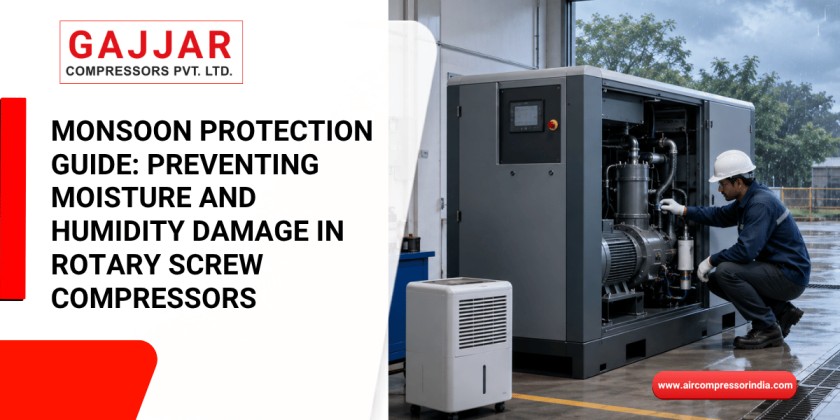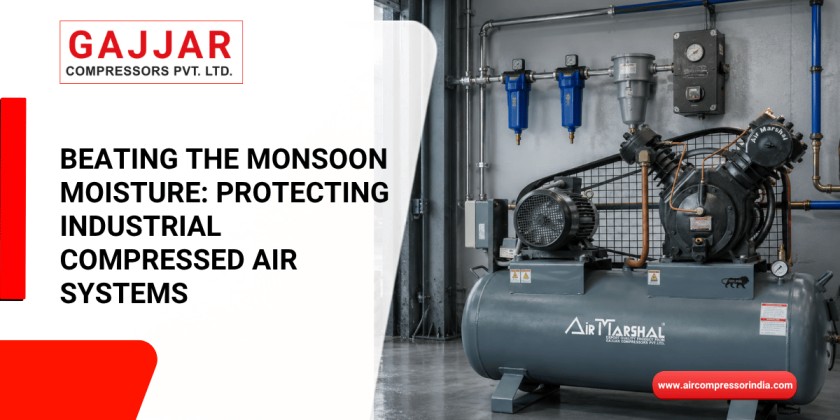
India’s monsoon brings relief from the heat, but for factories running on compressed air, it brings a whole different headache. Humidity climbs, and so does the water content in every breath of air your compressor pulls in.
From Ahmedabad to Pune and Chennai to Faridabad, plant managers see the same pattern every year. Pneumatic tools start acting sluggish, filters clog faster, and rust creeps into places it shouldn’t. It’s why so many compressor manufacturing companies in India push seasonal servicing before the rains even begin.
This guide walks through why monsoons hit commercial and industrial compressed air systems so hard and what you can actually do about it.
Why Does Monsoon Weather Affect Compressed Air Systems?
Every compressor draws in ambient air, then squeezes it down. During monsoon, that air is carrying far more moisture than usual, simply because humidity levels are higher.
Once compressed, that water vapour has nowhere to go but into liquid form. It settles inside your pipelines, storage tanks, and connected equipment.
The result: more moisture in compressed air lines and more problems downstream.
How Moisture Impacts Industrial Operations
Rust and Corrosion
Water trapped within receivers, valves, and pipe joints causes the rusting process to accelerate. The corrosive process corrodes the joints and reduces the life of equipment.
Reduced Equipment Efficiency
Pneumatic cylinders and air tools don’t like wet air. They respond slower, misfire, or lose grip strength, which slows down your whole line.
Product Quality Issues
Pharmaceuticals, food processing, electronics, and automobile painting all require clean and dry air because even a trace amount of moisture can:
- Damage delicate parts
- Ruins paint jobs
- Contaminates food production batches
- Increase rejection rates
Higher Maintenance Costs
Moisture in air results in:
- Changing of filters often
- Blockage of valves
- Damage to seals
- Increased wear and tear of components
None of these processes are affordable over time.
Monsoon Air Compressor Maintenance: Essential Practices
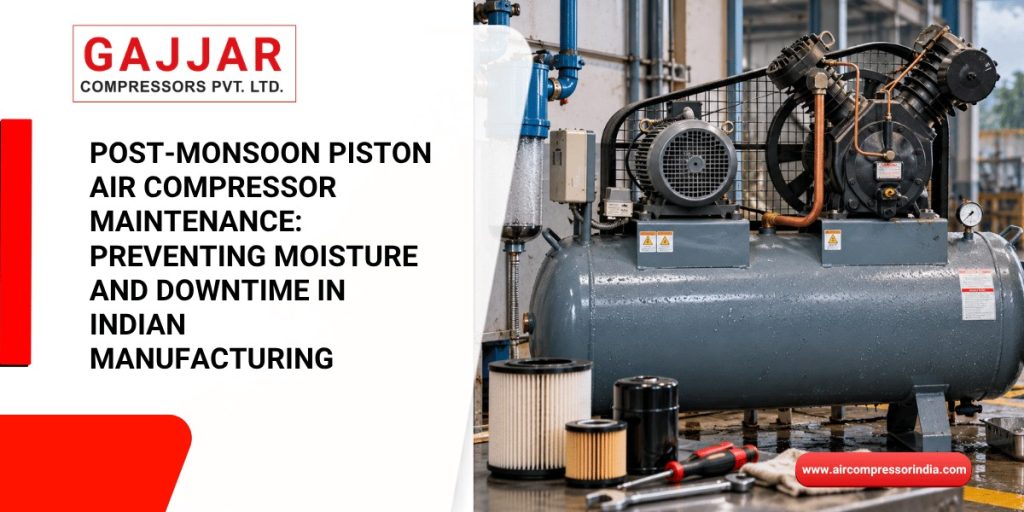
Monsoon air compressor maintenance is not difficult. Just being consistent is all that is required.
1. Drain Condensate Regularly
Condensate forms quickly when the weather is humid. Get into the habit of:
- Empty receiver tanks
- Check auto drain valves
- Clear moisture separators
Automatic drains clog too, so don’t assume they’re working without a look.
2. Service Air Dryers Before the Rains Hit
Your dryer is the frontline defence. Before monsoon sets in, get it checked:
- Replace worn filters
- Test dew point readings
- Inspect drain lines
- Confirm operating pressure
A dryer that isn’t performing well simply can’t keep up once humidity spikes.
3. Replace Air Filters on Time
Humid air is usually accompanied by dust particles. Filters may get blocked due to reduced airflow, allowing contaminants to pass through.
Watch out for:
- Intake filters
- Inline filters
- Oil separating filters
- Final filters
Following the recommended schedule prevents nasty surprises.
4. Inspect Pipelines for Water Collection
Water pools at low points in any pipeline run. Walk the line and check for:
- Sagging sections
- Poor drainage
- Rust patches
- Standing water
Adding drain legs at the right spots lets water escape before it reaches your machines.
5. Monitor Compressor Temperature
Wrong operating temperatures make condensation worse. Keep cooling components clean:
- Cooling fans
- Radiators
- Heat exchangers
- Ventilation gaps
Better airflow means better moisture control, plain and simple.
Choosing the Right Equipment for Indian Weather
Several compressor manufacturing companies in India now build machines specifically with our climate in mind. When you’re buying or upgrading, look beyond horsepower and pressure ratings. Ask about:
- Efficient air dryers
- Moisture separators
- Corrosion-resistant receivers
- Smart condensate drains
- Energy-efficient motors
These features matter far more once July and August arrive.
Practical Tips to Reduce Moisture in Compressed Air Lines
A few small habits go a long way toward cutting down moisture in compressed air lines.
- Install moisture separators
- Keep correct pipe slopes
- Check receiver tanks weekly
- Track dew point readings
- Plan maintenance before monsoon
None of these need a big budget. They just need someone to actually do them on schedule.
Common Mistakes Industries Make During the Monsoon
Even well-run facilities slip up. Watch out for:
- Ignoring drain maintenance
- Delaying filter changes
- Skipping seasonal checks
- Assuming dryers need no service
- Using undersized dryers
- Neglecting pipeline inspections
- Waiting for failure first
Fixing a problem after it happens almost always costs more than preventing it.
Benefits of Effective Monsoon Compressor Maintenance
Stay on top of maintenance, and you’ll notice:
- Improved production
- High quality of products
- Reduced maintenance costs
- Increased life of machinery
- Reduced corrosion
- Consistent air pressure
- No unexpected disruptions
When plants operate for the whole monsoon season, it sums up quickly.
FAQ Section
- Why do compressor manufacturing companies in India encourage more maintenance in monsoon?
The increase in humidity will cause an increase in the amount of moisture in the compressor system. If not addressed, the moisture can lead to corrosion, contamination, and breakdown of the equipment. - What really causes moisture in the compressed air systems?
Moisture is created due to the compression of humid air which results in condensation of water vapor to liquid water. - How often should the air compressor need maintenance during monsoon?
Weekly inspections can be done during the monsoon period and full servicing according to the schedule from your manufacturer. - Can moisture affect the quality of a product?
Yes, moisture can be seen in poor-quality paint jobs, contaminated foods, and inaccuracies in electronics/pharma manufacture. - What equipment helps reduce moisture?
There are air dryers, moisture separators, automatic drains, filter elements, and proper slopes of pipelines.
Conclusion
A monsoon does not have to disrupt your production schedule. With proper monsoon air compressor maintenance, as well as monitoring moisture in compressed air lines, you will be able to keep your processes smooth throughout the monsoon season.
Working together with well-respected compressor manufacturing companies in India who understand the situation will make the entire process easy. Our Aircompressorindia team will guide you to the appropriate compressor and dryer solution for Indian weather conditions.

Gajjar Compressors Pvt. Ltd.
Gajjar Compressors Pvt. Ltd. is an experienced name in the compressed air industry, providing reliable insights on industrial air compressors, air dryers, vacuum pumps, and related technologies. Our expert content is designed to help manufacturers and businesses make informed decisions, improve operational efficiency, and stay updated with the latest advancements in compressed air solutions.